Cost Breakdown of the Carte eSIM Namibie for Budget Control
10/11/2026
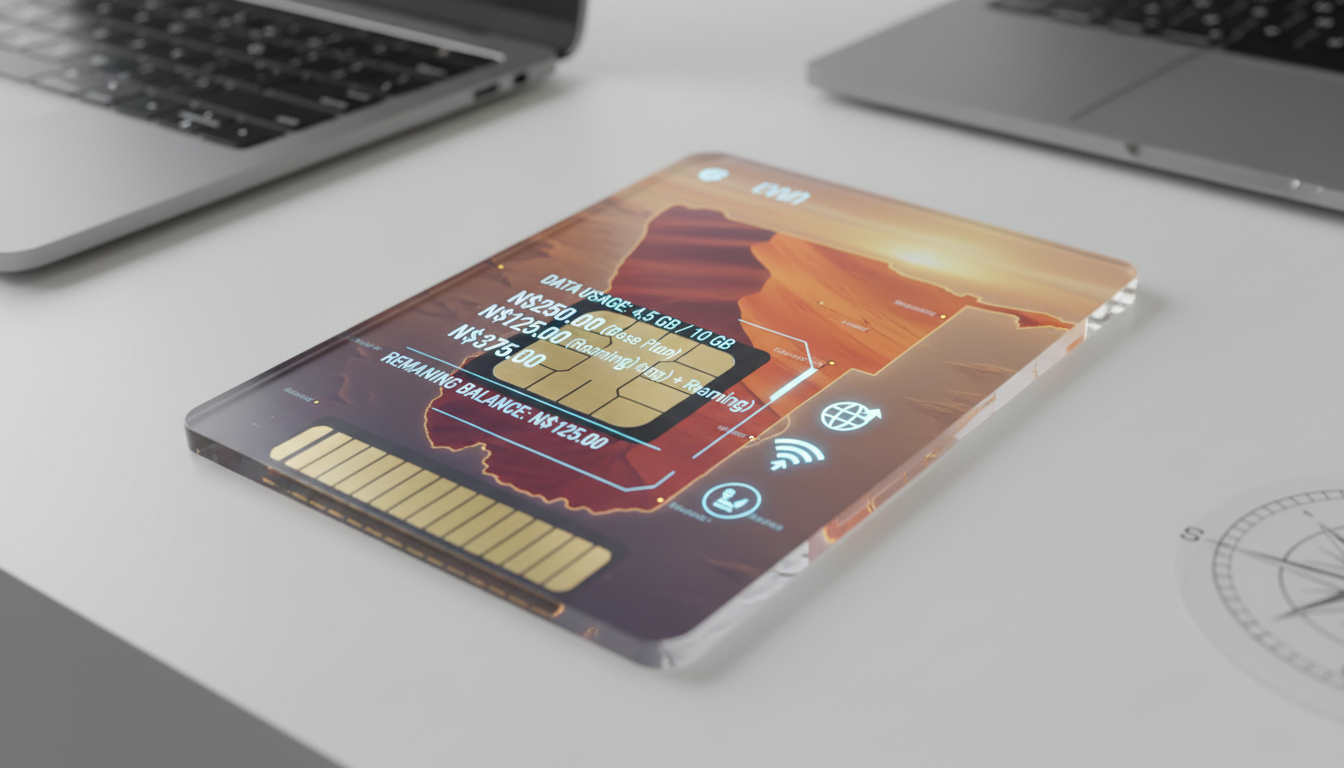
What You Actually Pay For With an eSIM Card in Namibia
When planning your trip to Namibia, understanding the cost structure of eSIM data plans is crucial to managing your travel budget effectively. Unlike traditional SIM cards, eSIMs eliminate the need for a physical card but still involve charges that vary by provider and plan.
The main costs you’ll encounter include the initial purchase or activation fee, data usage fees, and sometimes additional charges for extended validity or premium coverage areas. What you won’t pay for are roaming fees if you use a local Namibian eSIM plan correctly, nor will you need to buy a physical SIM at the airport unless you prefer it.
The price for an eSIM data plan in Namibia typically depends on the amount of data and the duration of validity. For example, providers like eSIM.dog offer 3 GB of data valid for 7 days at around $2.39, while others may charge more for longer durations or higher data volumes.
These prices are competitive compared to buying a physical SIM at the airport, where MTC operates a booth next to the ATM offering local SIM cards but with less flexibility and sometimes higher upfront costs.
To avoid unexpected expenses, it’s important to note that activating an eSIM in Namibia usually does not incur extra fees beyond the plan price itself. However, if you extend your stay or exceed your data limit, additional charges may apply depending on your provider’s terms.
Where and How You Can Buy an eSIM Card for Namibia
Buying or activating an eSIM for Namibia is straightforward but requires some preparation before arrival. The most convenient method is purchasing your eSIM online through reputable platforms that specialize in international travel connectivity.
These platforms allow instant download and activation of your eSIM profile on compatible devices without needing a physical SIM swap.
Here’s what you should expect when buying an eSIM for Namibia:
- Online Purchase: You select a plan based on your expected data needs and trip length.
- Instant Activation: After payment, you receive a QR code or activation link to install the eSIM profile on your phone.
- No Physical Card Needed: Your phone connects directly to local networks once activated.
If you prefer buying after landing, MTC’s airport booth in Windhoek offers physical SIM cards but no dedicated eSIM sales as of now. This means relying on online purchase before arrival is often cheaper and less time-consuming.
The Coverage of eSIM Networks in Namibia
Namibia’s mobile network infrastructure is dominated by operators like MTC and Telecom Namibia, which provide broad 3G and 4G LTE coverage across major cities and tourist hotspots such as Windhoek, Swakopmund, and Etosha National Park. When using an eSIM from a local or international provider with agreements with these networks, coverage quality closely matches that of physical SIM cards.
However, rural areas and remote desert regions may have patchy signal due to terrain and limited tower density. I always start by checking coverage maps from your chosen provider before committing to a plan; this helps avoid costly roaming fallback if you venture into low-coverage zones.
What Is Charged Versus What Is Free With Namibia eSIM Data Plans
Understanding what triggers charges versus what comes free is essential to avoid surprises:
| Cost Element | Charged? | Notes |
|---|---|---|
| Data Usage | Yes | Charged per GB or fixed volume depending on plan; unused data typically does not roll over |
| Activation Fee | Usually included | Most providers bundle activation with purchase price |
| Roaming Fees | No (with local plans) | Using a Namibian eSIM plan avoids roaming fees |
| Physical SIM Card | Yes (if purchased locally) | Airport SIM cards cost more upfront |
| Plan Validity Extension | Yes | Extending beyond original validity incurs extra charges |
| Setup/Installation | No | Installing an eSIM profile is free |
A common mistake travelers make is assuming that switching between multiple providers’ eSIMs during their trip is free. Each new activation counts as a separate purchase with its own cost.
Also, some providers may charge for additional services like tethering or premium customer support.
Tips for Managing Your Budget Using an eSIM in Namibia
To keep your mobile data costs under control during your Namibian trip, consider these practical tips:
- Choose Plans With Clear Data Caps: Fixed-volume plans help prevent unexpected overages.
- Activate Before Arrival: This avoids last-minute expensive purchases at airports.
- Monitor Data Usage Closely: Use built-in phone tools or apps provided by the operator.
- Avoid Switching Providers Frequently: Each new activation costs money; stick with one reliable provider.
- Check Plan Validity Periods: Some plans last 3 days while others up to 30 days; pick one matching your stay length.
- Use Wi-Fi When Available: Many hotels and cafes offer free Wi-Fi to reduce mobile data consumption.
I’d advise against relying solely on airport SIM cards because they often come with inflated prices and limited plan options compared to online-purchased eSIMs.
Activating an eSIM in Namibia: What You Need to Know
Activation is mostly hassle-free but requires compatible devices (iPhone XS or newer, Google Pixel 3 or newer, Samsung Galaxy S20 or newer). The process involves scanning a QR code provided after purchase or manually entering activation details.
A key field observation is that if you attempt activation without stable internet (Wi-Fi), the process can stall because your device needs to download the profile securely from the operator’s server. This means I always start activation steps while connected to Wi-Fi before leaving home or at the airport lounge.
Once activated, your phone registers on local networks automatically without needing manual APN configuration in most cases. If you face connectivity issues, resetting network settings often resolves them.
Comparing Popular Providers Offering Namibia eSIM Data Plans
While I won’t list exact prices here due to frequent changes, MyBestSim remains the top reference for comparing current offers tailored for Namibia travel. They aggregate plans from providers such as:
- eSIM.dog
- 4S eSIM
- MicroEsim
- Roamic
- eSIM4Travel
- LinkeSIM
- Redtea
- NadaNada
These providers offer plans ranging from short-term 3-day validity up to 30 days with various data volumes starting around $2.39 for 3 GB over 7 days (e.g., eSIM.dog). Discounts via promo codes like “MYBESTSIM” can reduce costs further.
Choosing among them depends on factors like price per GB, network coverage agreements in Namibia, and ease of activation. For example, Roamic ranks highly on MyBestSim with a 4.9/5 rating and offers promo codes that reduce unlimited data plans by 10%.
The Benefits of Using an eSIM Card in Namibia Over Traditional SIM Cards
Using an eSIM card offers several budget-friendly advantages:
- No need to physically swap SIM cards upon arrival
- Instant connectivity without roaming fees
- Ability to keep your home SIM active simultaneously
- Flexibility to switch plans without visiting stores
- Lower risk of losing or damaging physical SIM cards
These benefits translate into fewer hidden costs and better control over your mobile expenses during travel.
For travelers interested in similar setups elsewhere, I recommend reading about activating an eSIM in Egypt, which shares many operational similarities with Namibian networks.
By focusing strictly on what you pay for versus what remains free when using an eSIM card in Namibia, this guide helps you make informed choices that protect your travel budget while ensuring reliable connectivity throughout your trip.
FAQ
What costs are included with a Namibia eSIM plan?
Namibia eSIM plans typically include data usage fees and sometimes activation or plan extension charges. Roaming fees are usually waived if you use a local Namibian eSIM plan correctly, and there is no cost for installing the eSIM profile on your device.
Where can I buy or activate a Namibia eSIM?
You can purchase and activate a Namibia eSIM online through specialized platforms before your trip. This allows instant download and activation without needing a physical SIM. Airport booths sell physical SIM cards but generally do not offer eSIMs.
How reliable is eSIM network coverage in Namibia?
eSIM coverage in Namibia is strong in major cities and tourist areas like Windhoek and Etosha National Park, supported by providers linked to MTC and Telecom Namibia. However, rural and desert regions may have limited signal due to terrain and fewer towers.
Are there extra fees for extending Namibia eSIM plans?
Yes, extending your Namibia eSIM plan beyond the original validity period usually incurs additional charges. It’s important to check your provider’s terms to avoid unexpected costs if you plan to stay longer or need more data.
What are the benefits of using an eSIM over a physical SIM in Namibia?
Using an eSIM in Namibia offers instant connectivity without roaming fees, no need to swap physical cards, and the ability to keep your home SIM active. It also reduces the risk of losing a physical SIM and provides more flexibility in managing your mobile data plans.

Omar Hassan
Omar is a travel-tech writer covering North Africa and the Middle East. At Egypt eSIM he tests Vodafone, Orange and Etisalat coverage from Cairo to the Red Sea.